The Broken Toy Repair Shop
In a Nutshell
Mr. Mason’s small toy repair shop became a place where children learned to fix broken toys and help each other. The shop inspired kindness, patience, and community learning, turning simple repairs into meaningful life lessons.
Introduction
The Story
In the quiet town of Riverdale, there was a small street called Willow Lane. At the corner of this street stood an old wooden shop with a faded sign that read: “Mason’s Repair Corner.”
Most people walked past it without noticing.
The shop did not sell new toys, clothes, or gadgets.
It repaired broken ones.
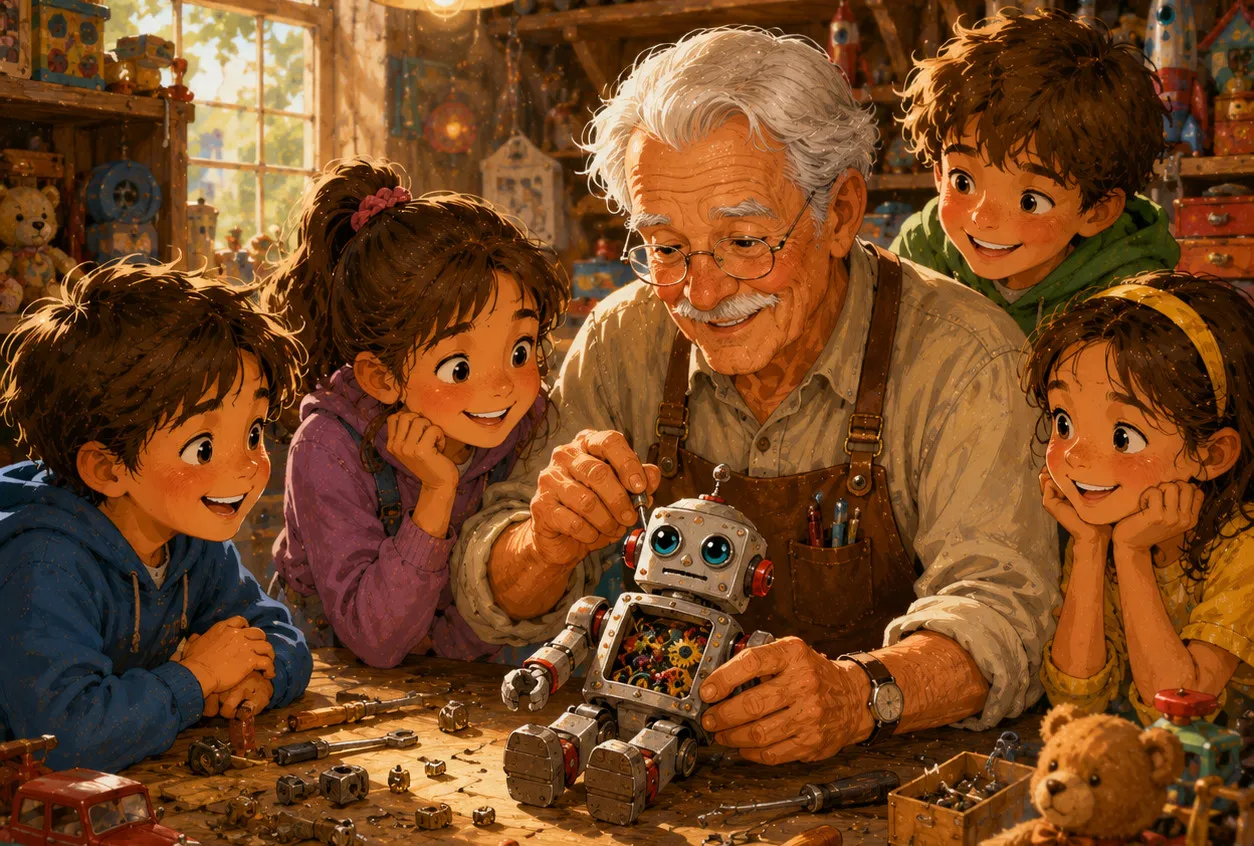
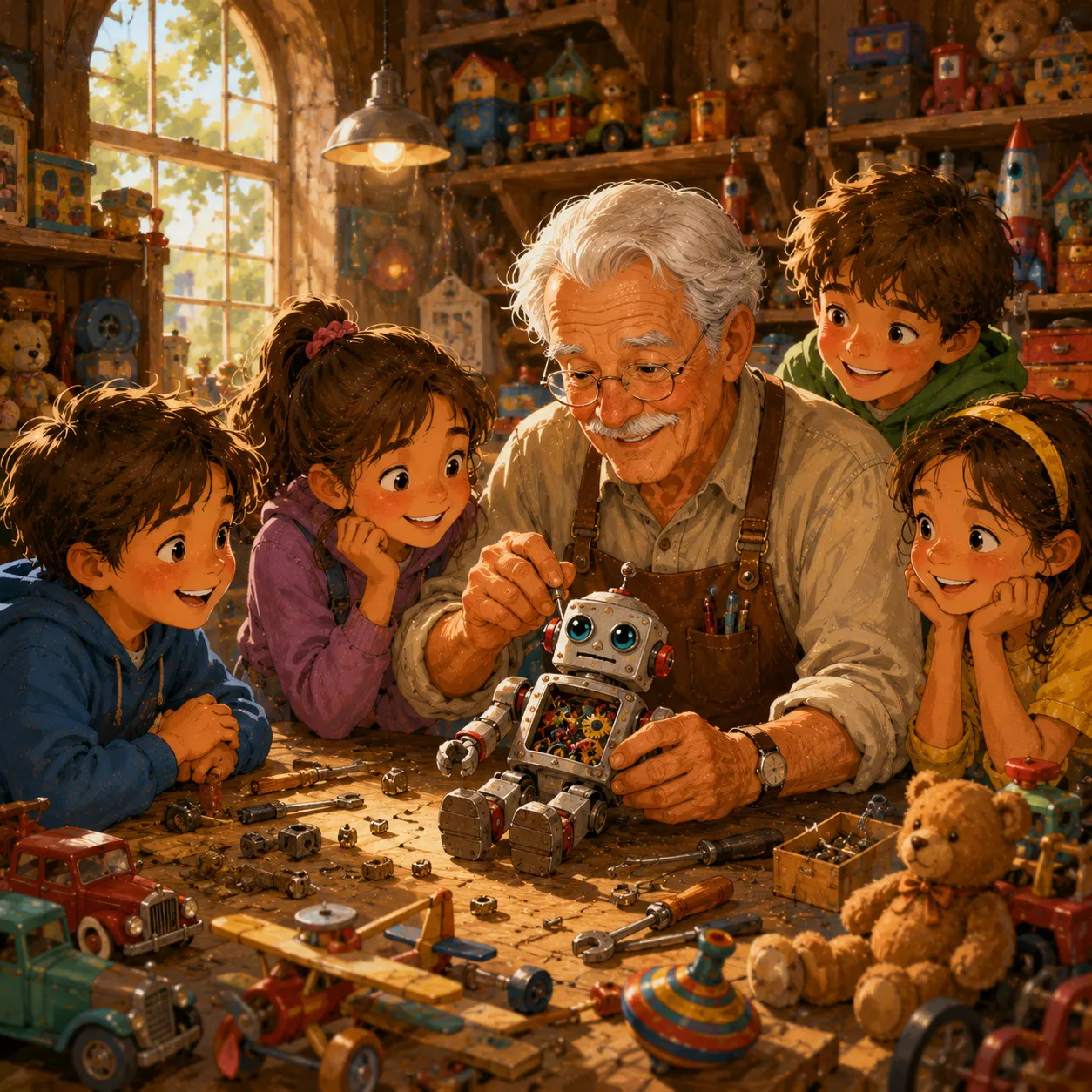
Inside, there were shelves filled with cracked toy cars, missing-piece puzzles, torn teddy bears, and dolls with faded paint.
The owner, Mr. Mason, was a calm and gentle man with silver hair and kind eyes. He believed that nothing was truly useless if someone cared enough to fix it.
One afternoon, a young boy named Ryan walked into the shop holding a broken robot toy.
Its arm had fallen off, and its lights no longer worked.
“My father gave me this before he went abroad,” Ryan said quietly.
“I tried fixing it, but I made it worse.”
Mr. Mason smiled warmly.
“Let’s see what we can do together.”
Ryan sat beside him as Mr. Mason carefully opened the toy, cleaned its tiny parts, and reconnected loose wires.
For the first time, Ryan noticed something special.
The shop did not feel like a repair place.
It felt like a place where broken things were given a second chance.
After some time, the robot’s lights flickered back on.
Ryan’s eyes widened with joy.
“It’s working again!”
Mr. Mason nodded.
“Sometimes things just need patience.”
Ryan left the shop happily, carrying his repaired toy as if it were brand new.
The next day, something unexpected happened.
Ryan returned with another broken toy.
Then another child came with a damaged bicycle bell.
Then a girl brought a torn doll.
Within a week, children from the neighborhood began visiting the shop regularly.
Mr. Mason never charged them.
Instead, he taught them how to repair things themselves.
“This is not just about fixing toys,” he would say.
“It is about understanding how things work—and how care can bring them back to life.”
Soon, the shop became a small learning space.
Children gathered after school.
They learned how to sew torn fabric, tighten screws, replace batteries, and glue broken pieces carefully.
But something else was also changing.
Children who once threw away broken toys now tried to fix them first.
They started helping each other repair things at home.
One rainy afternoon, Ryan noticed a girl sitting outside the shop, holding a broken music box.
She looked upset.
“My brother gave me this before he moved to another city,” she said softly.
“It doesn’t play anymore.”
Ryan remembered how Mr. Mason had helped him.
He walked over.
“Let’s fix it together,” he said.
Inside the shop, Mr. Mason guided them step by step.
When the music box finally played a soft tune again, the girl smiled through tears.
“It feels like he is still here,” she whispered.
As months passed, the shop became known as the “Kindness Repair Corner.”
Parents began visiting too.
Not just for toys—but for learning patience and care.
Even broken picture frames, clocks, and kitchen items were brought in and restored.
One day, the town council visited the shop.
“We want to turn this into something bigger,” they said.
“We can help you build a proper community repair center.”
Mr. Mason shook his head gently.
“It is already perfect,” he replied.
“Because it is not the shop that matters.”
“It is the kindness inside it.”
Instead, the town helped build small “Repair Benches” in parks and schools, where children and adults could fix simple items together.
Years later, Ryan grew up and became an engineer who designed eco-friendly machines.
But he never forgot the lessons from Willow Lane.
Whenever he faced a difficult problem, he would remember Mr. Mason’s calm voice:
“Take it apart carefully. Understand it. Then rebuild it with care.”
Ryan later returned to Willow Lane as a guest speaker at a school.
Behind him, a new sign had replaced the old shopboard.
It still read:
“Mason’s Repair Corner – Where Things and Hearts Get Fixed.”
The students asked him,
“Why did that small shop become so famous?”
Ryan smiled.
“Because it taught us something important.”
“Nothing is too broken to care about.”
“And no one is too small to help fix the world.”
The room became quiet.
Outside, children continued repairing toys at the benches Mr. Mason had once inspired.
And in every careful stitch, every tightened screw, and every fixed toy—
kindness quietly lived on.
Vocabulary Words
The Moral
Kindness can heal both broken things and broken hearts.
Life Lesson
When we take time to help fix something for others, we build patience, empathy, and stronger communities.